


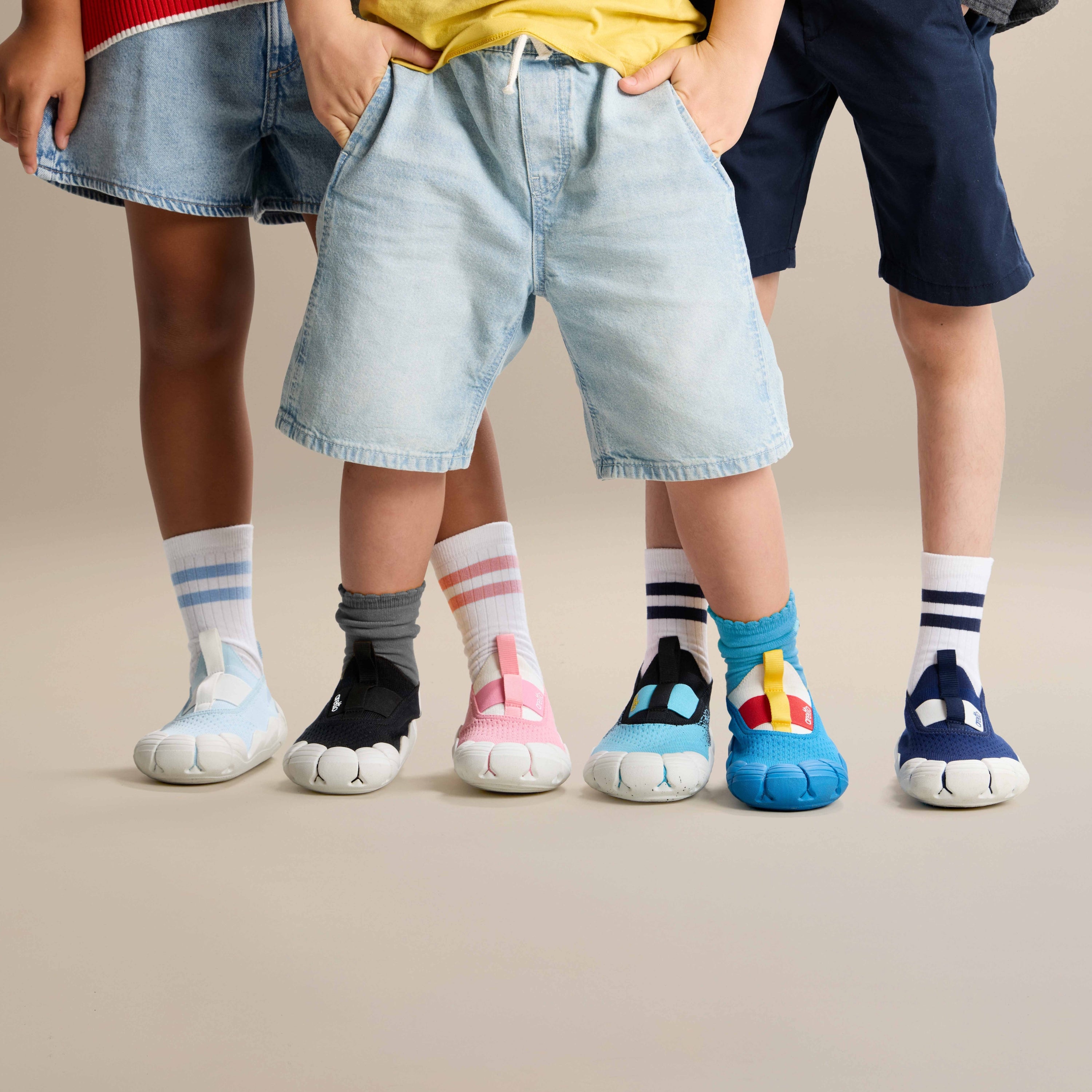

Your child may outgrow shoes quickly. But the footwear you choose during these early years quietly shapes their balance. Posture and long-term foot strength. Many parents assume kids’ shoes are just cute mini versions of adult sneakers. In reality, children’s feet function very differently. They grow fast. They are softer, and they depend heavily on flexible movement. And sensory feedback to develop correctly. Understanding children's shoe sizes to adults can help parents realize that sizing alone does not make adult-style shoes appropriate for kids.
This stage, from birth to around twelve years, is crucial. Almost half of a child’s foot is still cartilage. That means their feet can easily be influenced by shoes that are too stiff. Too narrow, or too heavy. The right pair can support healthy growth. While ill-fitting footwear, even if matched using a kid to adult shoe size reference, can hold them back.
Many parents also wonder when to change children's shoe sizes to adults. And mistakenly believe that a simple size match ensures proper support. In reality, the shape, flexibility, and materials of adult shoes are unsuitable for growing feet. Using kids vs adult shoe size. Only addresses length, not critical developmental needs like toe splay and intrinsic muscle growth.
How Children’s Feet Grow: The Science
Children’s feet contain 26 bones that are still soft and mostly made of cartilage. Their soles are cushioned with thick fat pads, which often makes their arches look flatter than they actually are. These arches, along with their gait pattern, are in a constant state of development. Understanding children’s shoe sizes to adults can help parents pick the right range of shoes, but doesn’t replace proper child-first design.
Kids rely heavily on ground feel. Sensory feedback tells the brain how to balance. How to move. And how to strengthen tiny intrinsic muscles. Because their bones and joints are flexible. Footwear plays a major role in shaping everything from foot alignment to future posture. Parents using a kid to adult shoe size comparison chart should still prioritize natural flexibility, lightweight design, and a wide toe box over size alone.
How Adult Feet Differ: Structure, Stability & Load-Bearing?
Adult feet are very different. By adulthood, bones are fully hardened, and joints naturally lose some mobility. The arches are stable, and the gait pattern is well established. Adults usually need cushioning and structured support to handle daily loads, body weight, and repetitive impact. This is why adult shoes are built for stability rather than development.
Kids’ Feet vs Adults’ Feet - Comparison Table
|
Feature |
Kids’ Feet |
Adults’ Feet |
|
Bone Flexibility |
Soft bones made mostly of cartilage; highly flexible and moldable |
Fully ossified bones; rigid and stable |
|
Toe Splay |
Toes spread naturally for balance, grip & sensory feedback |
Reduced toe splay due to footwear habits and bone maturity |
|
Natural Arch Formation |
Arches still developing; appear flat due to fat pads |
Mature, defined arches with stable structure |
|
Sweat Production |
Kids sweat 2× more through feet |
Lower sweat secretion; better thermo-regulation |
|
Temperature Regulation |
Feet heat up faster; need breathable materials |
More stable temperature regulation |
Why Kids’ Shoes Must Be Designed Differently?
Kids are learning balance and movement. They need shoes that let them feel the ground beneath their feet. When shoes are too narrow, toes can’t spread the way they are meant to. Thick, rigid soles block the sensory feedback. Heavy shoes make walking feel like a chore and can even delay walking. Over-supportive shoes weaken the muscles that should naturally grow strong. Designs copied from adult sneakers can slow down arch development rather than support it. Using a kids to adult shoe size does not fix these fundamental design issues.
The Biggest Industry Mistake: Shrinking Adult Shoes
Many brands simply scale down adult shoes for children. This sounds harmless, but it creates several hidden problems. Stiff outsoles make movement harder. Fashion-oriented shapes ignore natural foot anatomy. Most importantly, the fit is poor because children’s feet grow and change shape constantly. These mini adult shoes do not support the way kids actually develop. Parents often try to match sizes using a children's shoe sizes to adults reference, but this does not address the anatomical differences.
What Kids Actually Need in Footwear?
- Flexibility Requirements
Kids move best in shoes that bend easily with every step. A thin, flexible sole helps them balance, feel the ground, and develop a natural walking pattern.
- Anatomical Toe Box Importance
A roomy toe box lets their toes spread the way they’re meant to. This simple detail prevents cramped toes, early bunion signs, and awkward toe alignment.
- Weight and Movement
Light shoes make children feel freer and more confident on their feet. When footwear isn’t heavy, they explore, run, and climb with ease.
- Cushioning versus Support
Little feet don’t need rigid support, just gentle cushioning that lets muscles learn to work on their own. Too much structure can actually slow natural strength building.
- Growth and Fit Requirements
Kids’ feet grow fast, so sizing up correctly matters more than most parents realise. A bit of wiggle room protects developing toes during those sudden growth spurts.
- Breathable Skin-Safe Materials
Children sweat more through their feet, so their shoes must breathe well. Soft, non-toxic materials keep skin comfortable and reduce irritation.
Support Your Child’s Natural Foot Growth
Kids’ feet grow and change quickly. Choose lightweight, flexible shoes designed to support natural movement, better balance, and all-day comfort for growing feet.
Risks of Wearing Adult-Style Shoes in Childhood
When kids wear shoes modeled after adult designs, several problems can occur. These include delayed walking, balance issues, underdeveloped muscles, early pronation or supination, toe deformities, restricted circulation, overheating, and an increased risk of fungal irritation.
Expert-Backed Buying Checklist for Parents
-
Flexibility test
-
Bend test
-
Twist test
-
Toe box width check
-
Foot growth room check
-
Sole ground-feedback check
-
Material safety test
-
Weight test
The Hidden Risk of Downsized Adult Footwear
Most kids’ shoes are simply mini versions of adult shoes. Parents often assume children’s shoe sizes to adults is only about numbers, but the real issue is that the design philosophy is copied from grown-up footwear. These shrunken adult models restrict natural toe movement, feel heavy on the foot, and trap heat. They also impose incorrect arch expectations and weaken natural muscle development, which affects posture and alignment over time. As a result, even when parents look up kid to adult shoe size charts, they still end up choosing what looks good instead of what truly supports their child’s growing feet.
Shoes That Understand Growing Feet : Aretto
Aretto designs shoes based entirely on how children actually grow, instead of shrinking adult footwear. This matters because kids vs adults shoe size may overlap numerically, but the functional needs are completely different. Every Aretto element is engineered around child anatomy and real foot-scanning data.
Aretto features SuperGrooves that expand up to three sizes, making transitions easier even as parents track when kids’ to adult shoe size differs. The toe box is shaped to allow natural toe splay. The zero-drop sole supports natural posture. The ultra-flexible, feather-light sole helps with balance. The breathable, skin-friendly materials keep feet comfortable.
Aretto supports how kids actually grow, not how adults walk, even if the size label eventually overlaps with an adult size.
Childhood is the most important phase for foot development. The right footwear can set the foundation for strong arches, balanced posture, and healthy movement. Parents who choose children's first footwear are giving their kids a long-term advantage. When you want development-focused design, Aretto is a dependable choice.
Choose shoes designed for growing feet. Discover Aretto today.


