


Baby Shoes
Filters
4 products
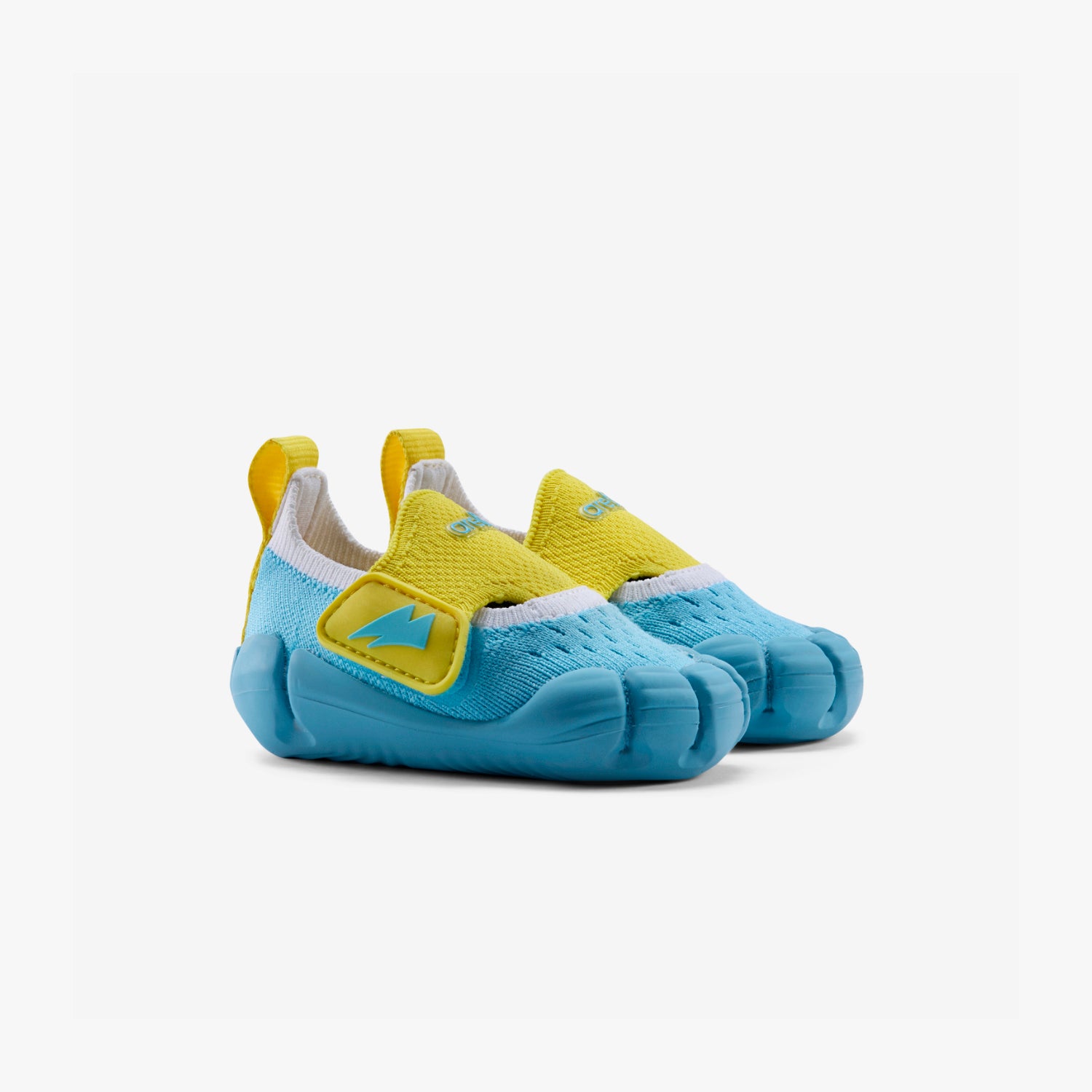
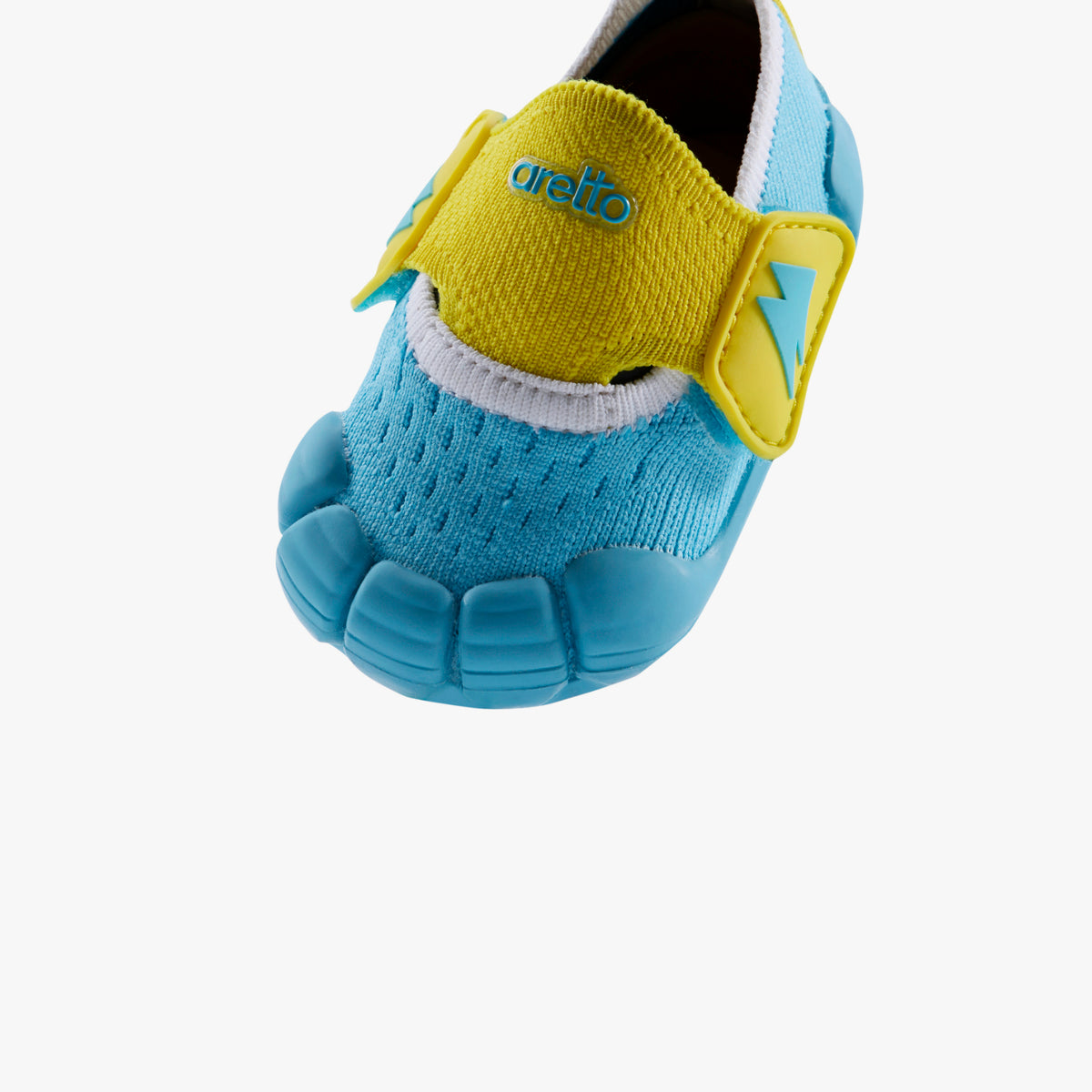
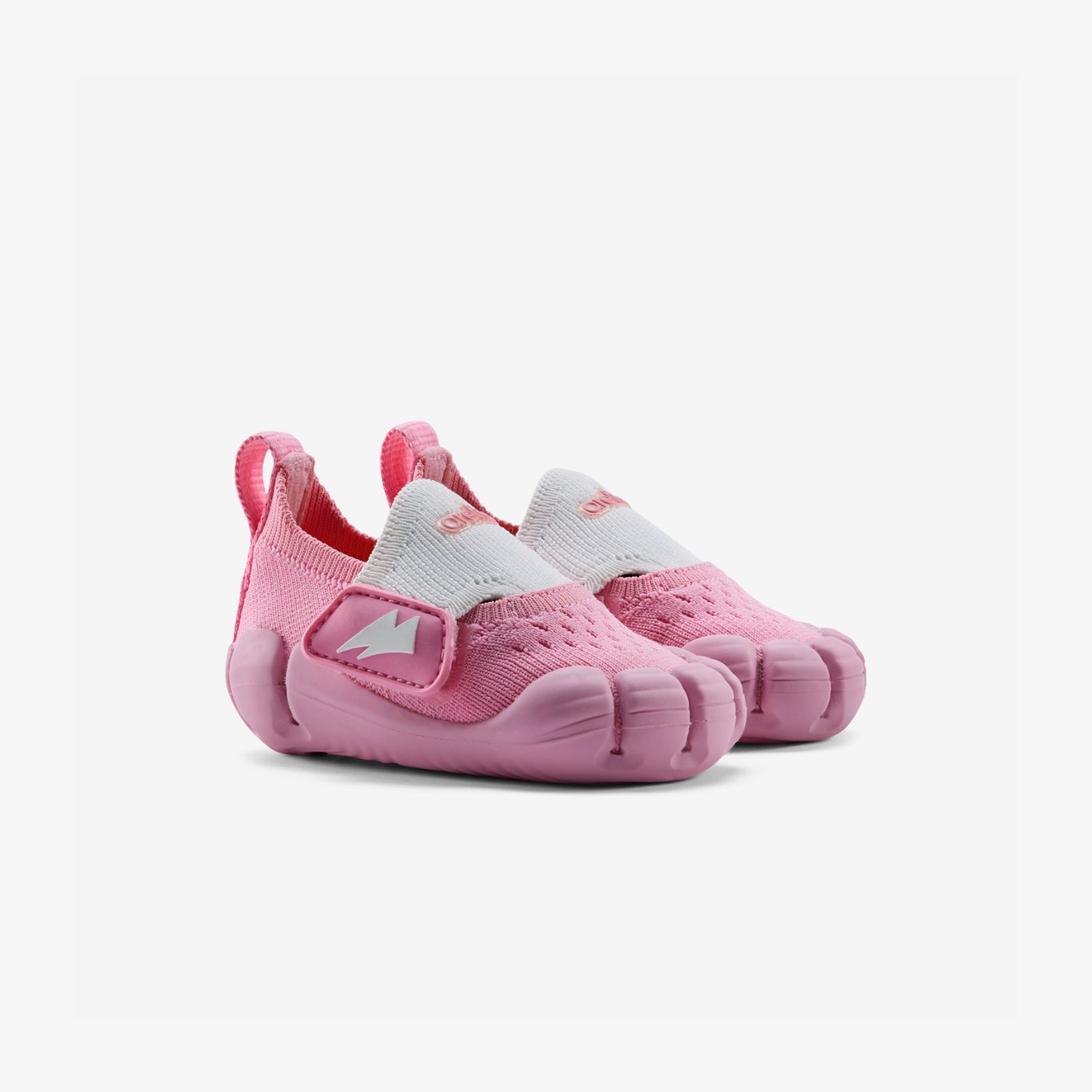
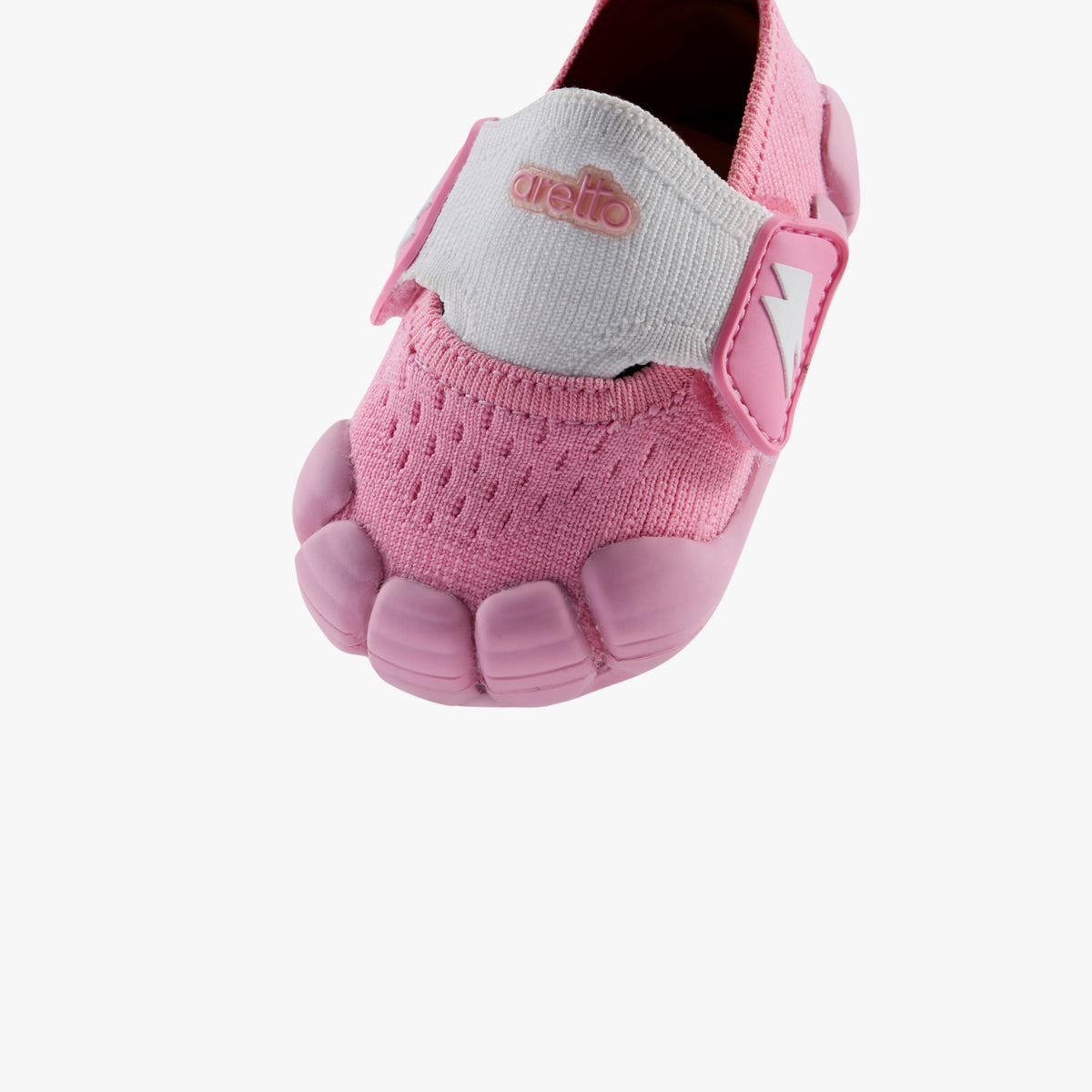
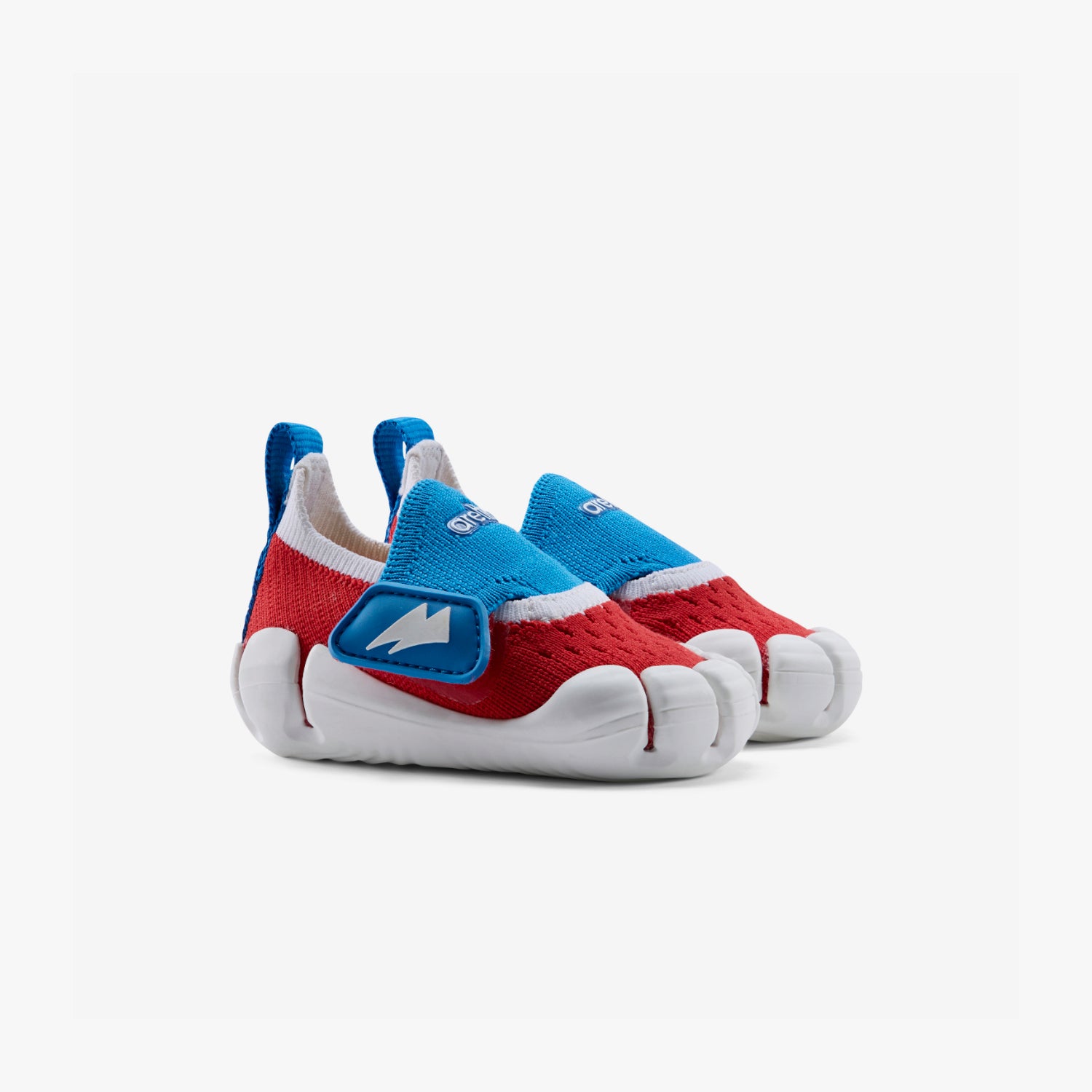
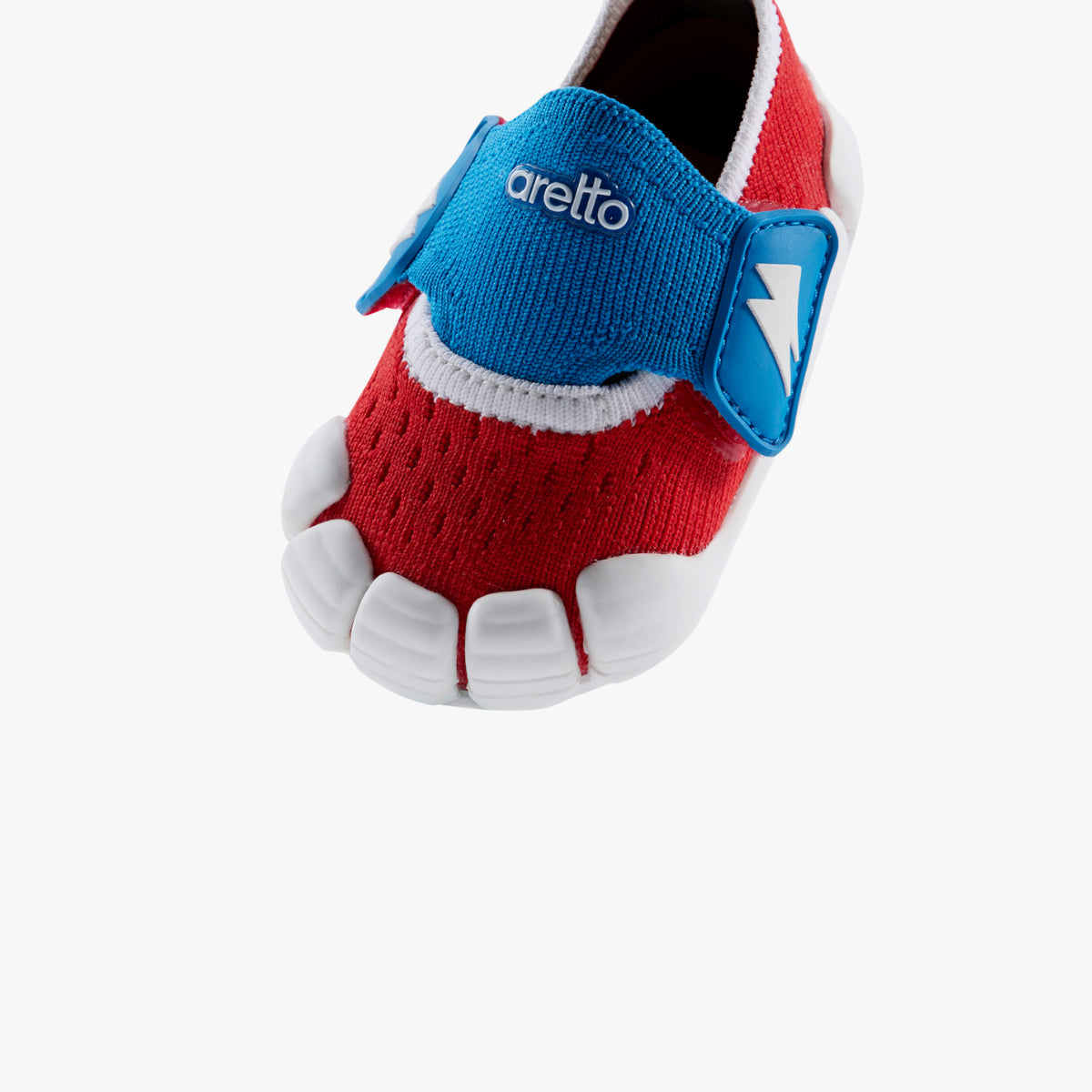
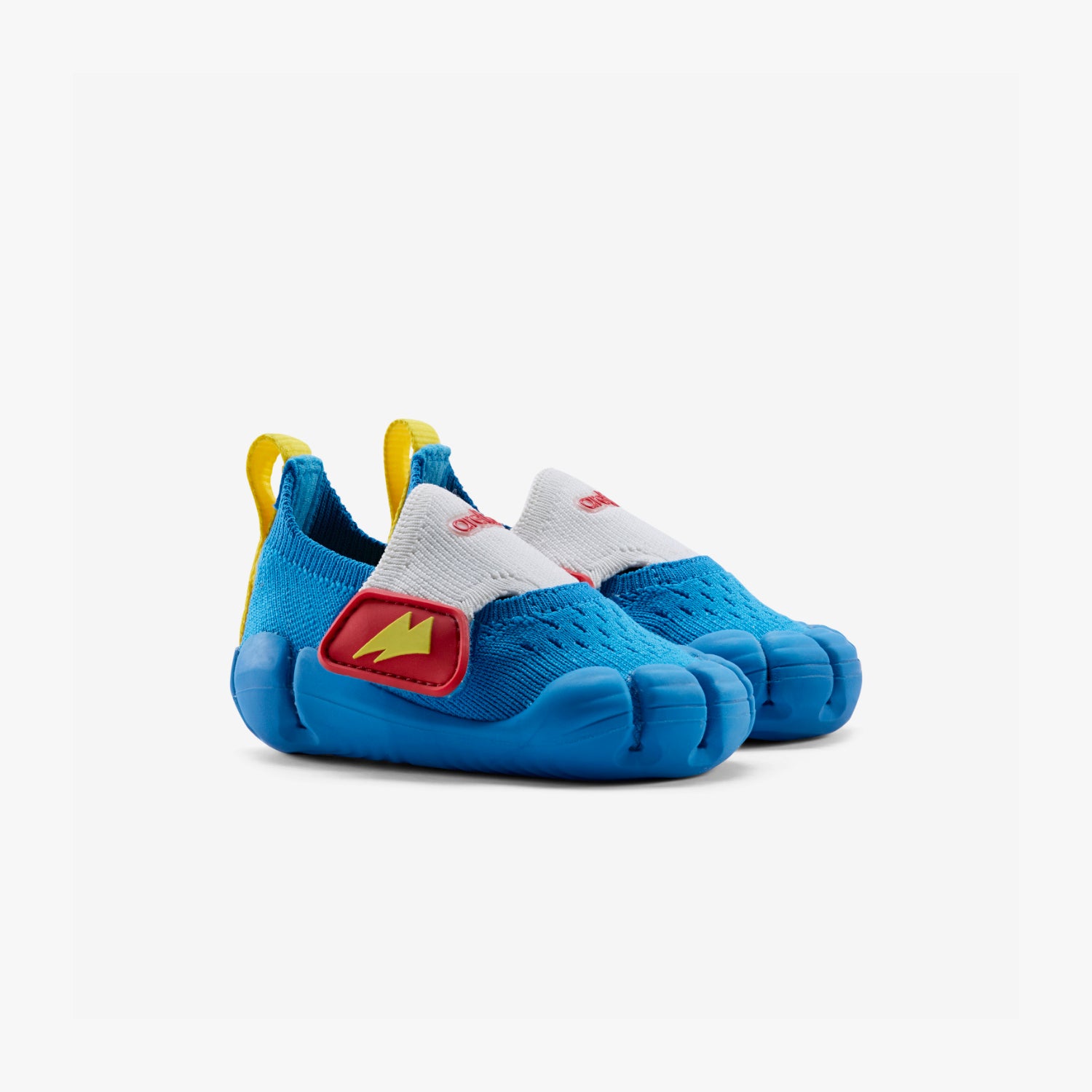
Baby Shoes - Shop Sizes for 6 Months to 1 Year
Baby shoes for 6 months to 1 year from ₹2,799, in EU 18 to 19. A strap over the instep holds them on, the knit upper stretches, and the sole opens as the foot lengthens. Measure the longer foot in centimetres and order that length.
When to Buy Baby Shoes, and When to Skip Them
A baby who is not yet walking does not need shoes to develop properly, and the settled paediatric view is that footwear at this stage is for protection rather than support.
So the purchase earns its place when your baby is carried outside, put down on a pavement or a play area, or pulling up and cruising along furniture. Cold floors and ground you did not choose are what a shoe is for.
If your baby is six months old and mostly on a mat at home, you can wait.
Order the Right Size First Time
Order on measured foot length, not on age, and the pair that arrives will fit.
This collection runs one band, and it is a narrow one.
| Aretto size | Age band | Foot length | EU | UK |
|---|---|---|---|---|
| S0 | 6 months to 1 year | 10.7 to 11.5 cm | 18 to 19 | 3.5 to 4 |
Lay the foot flat on paper, mark the heel and the longest toe, and measure the gap in centimetres. Do both feet and use the longer one. Under 10.7 cm nothing here will fit yet. Over 11.5 cm you want S1, in the toddler range.
Leave 10 to 12 mm between the longest toe and the front of the shoe.
These are expandable baby shoes, but the band is narrow: one pair covers up to two EU sizes, roughly 8 mm of length. That is less than the rest of the Aretto range, because the 6 to 12 month band is itself narrow.
Full conversions sit on the kids' shoe size chart.
Buy a Pair That Stays On
Every pair here fastens with a strap across the instep, and at this age that is the whole point.
A baby will pull a shoe off in the pram, in the car seat, and roughly forty times a day for entertainment. A slip-on relies on gripping the heel, which is exactly what a baby defeats by kicking. A strap holds the top of the foot instead, so the shoe stays on without the opening needing to be tight.
It is adjustable too, which matters while the sole is expanding and the foot is widening, and it opens wide before it closes, so you can get it onto a foot that is being actively uncooperative.
The breathable knit upper does the rest, following a chubby instep instead of gapping at the sides, with no rigid heel counter pushing the foot forward.
Pick the Colour, the Shoe Is the Same
The shoe is the same. The colour is the choice.
Every pair shares the sole, the last, the upper and the size band. Baby boy shoes and baby girl shoes differ in colourway and nothing else, because there is no anatomical reason to separate them at this age.
So order on colour, and on what suits the pram and the outfits. If the shade you want sits on the other side of the store, order it from there and the fit will be identical.
What You Get for the Price
Four things matter more on a baby shoe than on any other shoe in the store.
The sole is flexible. It bends where the foot bends, which for a cruising baby is most of the shoe.
The heel is soft. No rigid heel counter, so nothing pushes against the back of a foot that has never been in a shoe.
The upper is knitted. Infiknit™ is a 2.5 mm 3D-knit in a polyester and spandex blend that stretches in every direction, flexing around a chubby instep instead of pressing on it.
The insole is cushioned. SquishyFoam is a 6 mm high-density insole that compresses and springs back.
The base is zero-drop, so heel and toe sit level, and the front is a wide toe box with room for toes to spread. The Supergrooves channels open as the foot lengthens, which is what buys the second EU size.
Buy It as a Gift, and Say When It Fits
Order S0 and say what it is for.
This is the most common mistake in baby footwear gifting. A shoe that is slightly big waits a few weeks. A shoe that is small is useless on the day it arrives, and nobody will realise until it is too late to exchange. S0 is the smallest size made, so ordering it means the shoes can only ever be early.
If you do not know the foot length, ask for it rather than guessing from the age. Two six-month-olds can be a full size apart, which is why baby shoes bought as a gift so often arrive unusable.
For boxed sets with socks and a wooden toy included, look at newborn baby gifts.
If You Came Looking for Soft Booties
Aretto does not make them.
Soft infant shoes suit a baby who is carried and put down on clean indoor floors. Every pair here has a flexible but structured sole built for a foot that takes weight, so if soft booties are what you came for, buy those first and come back at six months.
Washing Them Without Wrecking Them
Machine wash on a gentle cycle in cold water, then air dry out of direct sunlight and away from any heat source. Heat is what damages a knit upper and a glued sole, and the warranty does not cover damage from improper washing.
For everyday marks, spot clean with mild soap rather than washing the whole shoe. A baby shoe collects more food than mud, and most of it comes off with a cloth.
When to Order the Next Size Up
Check the fit monthly at this age, more often than the rest of the store needs.
There is a reason for that interval. A systematic review of children's footwear found that children's feet grew enough to need a half-size change every two to three months, faster still before 15 months. A study tracking foot growth in 107 children put it tighter again: before 15 months a half-size change could be needed in under two months.
A baby will not tell you a shoe has gone tight, so the tape does the telling. Look for red marks across the top of the foot after a wear, or toes curling rather than lying flat when the shoe is off.
When the measurement passes 11.5 cm, the next pairs are in toddler shoes.
What Happens After You Order
Prepaid orders ship free, and cash on delivery adds ₹50 on carts up to ₹10,000. Orders usually arrive within 5 business days, or 5 to 10 days outside the metros.
A size exchange can be requested within 10 days of delivery, with free pick-up in most locations. Keep the original packaging ready: the shoe box, the foot scale, the shoe tag, and the butter paper. Exchanges are valid once per order, and only size exchanges are accepted.
Returns also run to 10 days. Every pair carries a one-year warranty covering sole pasting and stitching defects, though not ordinary wear.
Full terms sit on the shipping and refund policy.
Measure First, Then Order
Take the foot length in centimetres before anything else, because with a single size band the measurement decides whether this collection is the right place for you at all.
Between 10.7 and 11.5 cm, order from this page and pick on colour. Prices start at ₹2,799.
Under 10.7 cm, wait. Over 11.5 cm, go to the toddler range.
Frequently asked questions
Shop Kids’ Shoes by Collection
Kids School Shoes | Toddler Shoes | Boys Shoes | Girls Shoes | Kids Sports Shoes | Boys Running Shoes | Girls Running Shoes | Boys Sneakers | Girls Sneakers | Boys Casual Shoes | Girls Casual Shoes | Kids Barefoot Shoes | Baby Shoes | Infant Shoes | Newborn Baby Shoes | Newborn Baby Gifts