
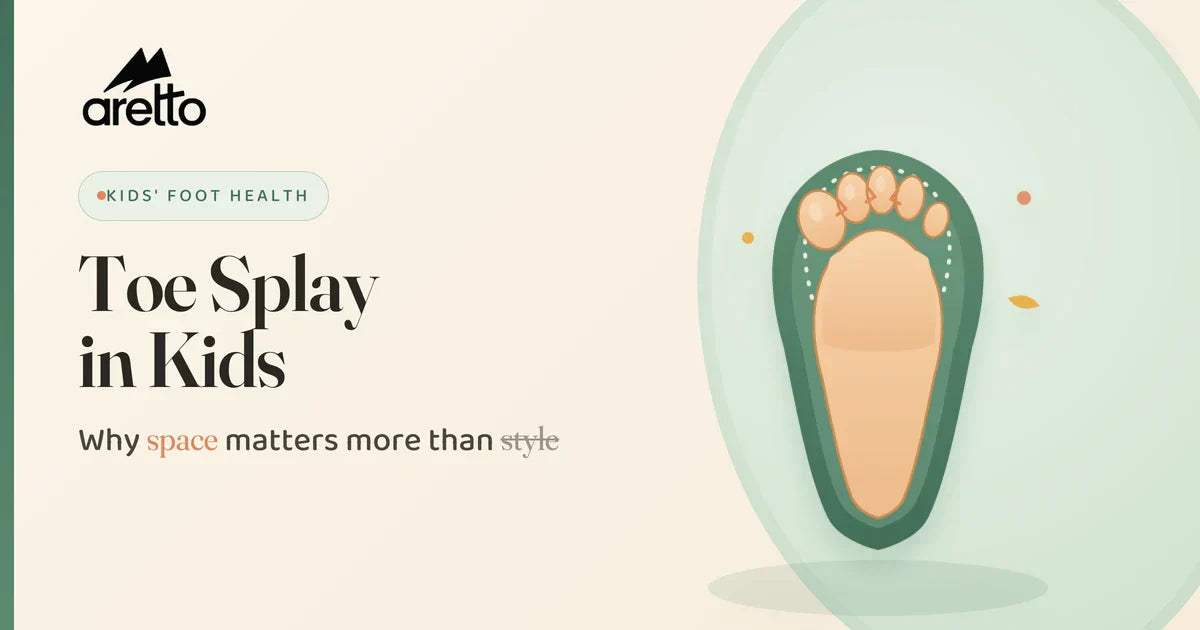
When you buy shoes for your toddler, you probably look at the colors first. Maybe the tiny Velcro straps. Maybe the cute little dinosaur print your child refuses to stop touching in the store. Most parents do exactly that. But almost nobody checks whether the shoes actually allow healthy foot movement.
Toe splay sounds technical, but it’s actually very simple. It’s the natural way your child’s toes spread while standing, balancing, or walking around the house. Tiny movement but huge role. That natural spreading, when done quietly, helps with balance, posture, grip, and overall foot strength during early childhood.
The problem is that many modern toddler shoes do the opposite. Instead of letting the toes move naturally, they squeeze them together inside narrow shoe shapes. And because toddlers cannot always explain discomfort properly, parents often miss the signs completely.
Sometimes it shows up quietly. Your child trips more often. They remove the shoes after ten minutes. They suddenly refuse to wear one pair even though they liked it last week. Small things like this usually tell you much more than words.
What Does Toe Splay Mean?
Splay foot simply means the front part of the foot spreads wider because the toes naturally move outward. In toddlers, this is neither unusual nor dangerous. In fact, some amount of spreading is completely healthy because growing feet need space to balance properly.
If you watch your child walking barefoot at home, you’ll notice it immediately. The toes naturally spread while balancing, especially during quick turns or while trying to climb something they probably shouldn’t be climbing. That wide toe spread helps them stay steady and confident as they move.
Your child’s toes work harder than most parents realize. They constantly adjust body weight, grip the floor, and support balance throughout the day. Which is why tight shoes become a bigger problem than they initially seem.
Why Natural Toe Splay Matters During Early Childhood?
Toddler feet are still developing every single day. Their bones are softer, their muscles are weaker, and their walking pattern changes constantly while they grow. This is why flexibility matters so much during these early years.
When your child has enough room for spread out toes, tiny muscles inside the feet become stronger naturally through movement. Running through the house, jumping on the bed when you just told them not to climb furniture. Every little movement helps strengthen balance and coordination over time.
Children honestly do not need stiff shoes controlling every step. They usually do much better in flexible footwear that moves naturally with their feet. That’s one reason many experts now recommend lighter, softer shoes for toddlers instead of heavily structured designs.
The Core Problem: Modern Shoes Restrict Spread Out Toes
A lot of toddler shoes today are designed to look stylish first. Mini adult sneakers. Thick soles, narrow fronts, structured shapes. They look adorable on shelves, but many are not actually designed around healthy toddler feet.
Most modern toddler shoes are:
• Narrow near the toes
• Built with stiff materials
• Heavy for little feet
• More focused on style than movement
The issue is that toddler feet are naturally wider near the front. When shoes constantly compress that area, natural movement slowly becomes restricted. Your child may still walk normally for a while, which is exactly why parents often miss it.
You may notice small signs instead:
• Red marks after removing shoes
• Frequent tripping
• Shoes bulging near the sides
• Wobbly walking
• Constant shoe removal
These little things usually mean the shoes are not giving enough room for natural toe movement.
What Is the Toe Box?
The toe box is simply the front area of the shoe where the toes sit. A healthy toe box should feel roomy enough for natural toe splay without making the shoe loose.
Think of it this way, your child’s toes should rest naturally inside the shoe, not press tightly against each other all day long. If the front area looks narrow or pointed, the toes are probably not sitting comfortably inside. Flexible shoes with a wider front area usually feel much more natural for toddlers. Especially during active play.
Why Proper Toe Movement Matters More Than Parents Realize?
The first few years are extremely important for foot development. Toddlers spend almost the entire day moving. Running, squatting, climbing, falling, getting back up again. Their feet are constantly learning balance through movement.
When shoes allow natural toe splay, movement feels smoother and more stable. Tiny muscles inside the feet gradually become stronger through everyday activities. This naturally supports posture and coordination over time without forcing the foot into a rigid position.
A lot of parents assume stronger shoes automatically mean healthier feet. Honestly, that’s not always true. Sometimes softer and more flexible shoes actually support healthier movement much better.
Why Does Wide Toe Spread Helps Your Child Feel More Stable?
Toddlers rely heavily on their toes while balancing. Whether your child is climbing onto the sofa or running across slippery floors in full excitement mode, the toes constantly help stabilize the body.
When shoes are too narrow, the natural balance system is disrupted. Some children start gripping the inside of the shoe while walking. Others simply look less steady during movement. Parents usually notice the wobbling first, not the underlying cause.
This is also one of the biggest benefits of toe shoes. The feet stay in a more natural position throughout the day. And when movement feels natural, children usually look more comfortable and confident, too.
Support Your Child’s Natural Foot Growth
Kids’ feet grow and change quickly. Choose lightweight, flexible shoes designed to support natural movement, better balance, and all-day comfort for growing feet.
Developmental Consequences of Ignoring Healthy Toe Movement
Ignoring natural toe splay during early childhood may gradually affect movement patterns later. Problems usually begin with small signs. Poor balance, frequent tripping, and slight discomfort while walking, nothing dramatic at first.
But over time, restricted movement can gradually worsen posture and walking comfort.
Short-Term Effects
- Poor balance
- Frequent tripping
- Unstable walking
- Faster foot fatigue
Long-Term Effects
- Weak arch development
- Poor posture
- Joint misalignment
- Unnatural walking patterns
The early years matter more than most parents realize. Small daily restrictions quietly shape long-term movement habits.
Toddlers Need Space More Than Heavy Support
Many parents believe toddlers need thick soles, firm arch support, or heavy cushioning for healthier feet. It sounds logical at first. But growing feet usually develop better when movement feels natural and unrestricted.
Toddlers generally benefit more from:
- Flexible soles
-
Lightweight shoes
- Ground feedback
- Comfortable wide toe spread
Healthy feet become stronger through movement. Not through stiff shoes, controlling every step.
Benefits of Toe Shoes for Growing Feet
One of the biggest benefits of toe shoes is the comfort they provide during movement. Flexible shoes with roomy toe boxes let children walk, run, squat, and climb more naturally without squeezing their toes together.
Another major benefit of toe shoes is better balance. Since the toes can spread naturally, the body feels more stable during active movement. Toddlers often appear more relaxed and confident while wearing flexible shoes that move naturally with the foot.
The benefits of toe shoes also become noticeable during long play hours. Children usually feel less tired because the shoes do not fight against natural movement throughout the day.
Comparison Table: Traditional Shoes vs Toe-Friendly Shoes
|
Feature |
Traditional Toddler Shoes |
Toe-Friendly Shoes |
|
Toe Space |
Narrow |
Wide |
|
Toe Movement |
Restricted |
Natural toe splay |
|
Flexibility |
Stiff |
Flexible |
|
Comfort |
Temporary |
Long-term comfort |
|
Balance Support |
Lower |
Better |
|
Foot Development |
Limited |
Encouraged |
Shoes designed with a wide toe spread usually feel much more comfortable for growing children during everyday activities.
Simple At-Home Toe Check for Parents
This takes less than a minute. First, let your child stand barefoot on the floor. Notice how naturally the toes spread while balancing. Then put the shoes on and check the front area carefully.
If the toe shape disappears completely or looks squeezed inward, the shoe is probably too narrow. Simple checks are very helpful.
How Aretto Supports Healthy Growing Feet?
Aretto shoes are designed around the way children’s feet naturally grow and move. Instead of copying stiff adult-style footwear, the design focuses more on flexibility, comfort, and healthy movement. You notice the difference almost immediately when you look at the front shape of the shoe.
The wide toe box gives enough room for natural toe splay throughout the day. Your child’s toes can move naturally instead of feeling compressed inside narrow shoe shapes. That extra room helps toddlers feel more balanced while walking, running, climbing, and playing.
The shoes also feel soft and lightweight, which honestly matters a lot more than people think. Toddlers move constantly. Heavy shoes can make movement tiring very quickly. Aretto’s flexible material bends naturally with the foot, helping support spread out toes without restricting movement.
Another thing parents appreciate is the adaptive growing-fit design. Children outgrow shoes surprisingly fast, and tight shoes can quietly affect comfort before parents even realize it. Aretto helps maintain comfortable spacing during growth spurts, especially around the toe area where children need the most freedom.
The benefits of toe shoes become much easier to understand once you actually see children moving comfortably in them. Instead of forcing the feet into stiff shapes, Aretto supports natural movement while still keeping the clean, modern look parents usually want.
Healthy movement begins with giving growing feet the space they naturally need every day. Discover kids’ barefoot shoes designed for better movement, balance, and all-day comfort.


