
Quick Summary
So you’re looking for shoes for your kid, and you probably think getting the size right is the main thing. But honestly, there’s way more to think about than just that. Your kids are growing all the time, and the shoes they wear every day actually change how they run, move, and basically everything else.
Zero-drop shoes keep the heel and forefoot at the same height, with no raised heel. But that’s just one thing. A shoe needs way more than just zero drop actually to work. It needs space around the toes, the sole has actually to bend, and it just has to fit your kid’s foot properly.
Key Takeaways
-
Kids’ feet are always growing and getting bigger, so kids shouldn’t be stuck in stiff shoes that don’t let them grow.
-
Zero drop shoes have the heel and toe at the same level, which means kids can move more naturally.
-
A bendy sole and a wide toe box let kids’ feet move and get stronger the way nature intended.
-
Getting the right footwear will actually help your kid move better every single day.
Kids' feet change as they grow, and shoes sit between those feet and the ground most of the day. So the basic stuff about shoes actually matters. Like how much room the toes have, how easily the sole bends, and whether the heel is higher than the forefoot.
A shoe can't control how a kid's feet develop, but it can give the foot room to move or put more structure around it. That difference really matters when you're looking at flexible shoes with a wide toe box and zero drop shoes.
Kids’ feet aren’t just tiny versions of adult feet. They’re basically soft cartilage with arches that still need to develop and muscles that are still learning how to work together. When you actually understand how kids’ feet work and grow, you see why natural movement and good shoes matter so much during these growing years.
When kids run barefoot, their toes spread out to help them balance their bodies naturally. The arches start working when they push off the ground. The ankles and hips move on their own. That’s literally how their bodies build strength and figure out coordination.
But look at what happens in most regular kids’ shoes. The toe box is narrow, so it squeezes the toes together. The heel sits raised, which pushes the whole body forward. The arch is overcushioned, which basically does the work the foot muscles should be doing. Some of this stuff sounds good on paper, but it actually messes up how kids naturally learn to move. A lot of parents think they’re helping when they’re really just slowing everything down.
Kids’ feet are soft, flexible, and still developing, so whatever shoes they wear most of the day affects not just their feet but also their knees, hips, and posture. Kids outgrow shoes fast, but shoes also shape how they grow by teaching balance and soft landings while building bone and muscle with every step, run, and jump.
What Does Zero Drop Mean in Shoes?
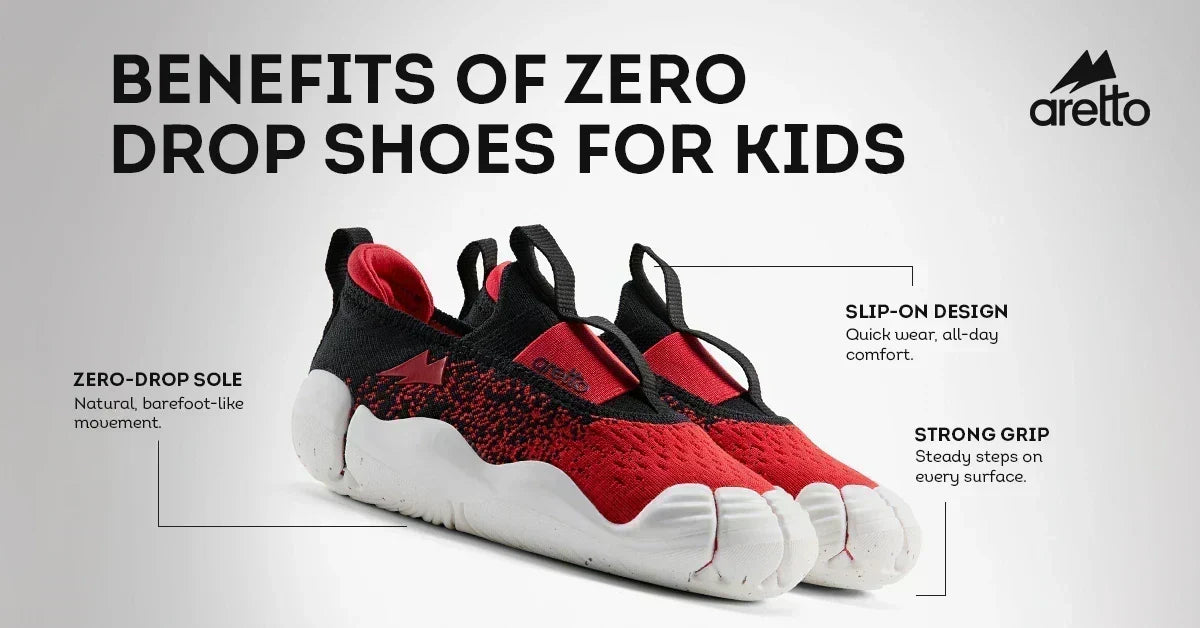
Drop is how much taller the heel is compared to the toe inside the shoe. Most regular shoes lift the heel slightly higher than the toe, creating what people call a drop. Zero-drop shoes keep the heel and toe at the same height, so there’s no drop, and the foot stays in a normal position.
Zero-drop shoes keep the foot flat, which lets the arches actually work the way they're supposed to and creates proper posture from the ground up. But here's the thing nobody really thinks about. Instead of your weight pushing forward onto your heel, it gets distributed evenly across your foot. Your foot and ankle muscles start working naturally instead of getting lazy. And you get better posture without even having to think about it. Small changes in kids' shoes can make a huge difference, which is why parents notice their kids walk and run and climb so much better once they actually switch.
Zero Drop Shoes Benefits
1. Natural Posture and Spinal Alignment: Zero-drop shoes don’t have a heel lift, so they’re just flat. Kids end up standing taller and moving more naturally, which makes their posture better from the ground up.
2. Muscles and Healthy Arch Development: When feet actually work the way they’re supposed to, the muscles and tendons and arches get stronger. Zero drop shoes let feet do what they’re meant to do instead of stopping them.
3. Better Balance and Coordination: Zero-drop shoes help kids feel the ground under their feet, which boosts balance and coordination and actually builds their confidence.
4. Proper Toe Splay for Stability: Kids balance way better when their toes can spread out freely. That’s why wide-toe-box shoes for kids really matter for healthy foot alignment and being stable when they move.
5. Reduced Joint Stress: When kids wear zero-drop footwear, their bodies stay in the right alignment. That means way less pressure on the knees and hips and lower back, which regular heeled shoes just quietly stress too much.
6. Lifelong Healthy Gait Patterns: When feet move naturally from the start, they develop healthier walking patterns for their whole life. Zero-drop shoes give that kind of lasting benefit.
Let Growing Feet Move Naturally
Encourage healthy foot development with barefoot shoes featuring a zero-drop sole, wide toe box, and flexible construction that supports natural movement.
Zero Drop vs Barefoot vs Minimalist Shoes
People use these three words like they all mean the same thing, but they really don’t. They’re connected, but they’re actually different.
|
Feature |
Zero-Drop Shoes |
Barefoot Shoes |
Minimalist Shoes |
|
Heel-to-toe drop |
0 mm |
Usually 0 mm |
Usually low or 0 mm |
|
Toe box |
Can vary |
Usually wider |
Often wider |
|
Sole flexibility |
Can vary |
Usually flexible |
Usually flexible |
|
Cushioning |
Can vary |
Usually lower |
Can vary |
|
Main idea |
Level heel and forefoot |
Natural movement without interference |
Reduce structure and weight |
Zero drop just means the heel is the same height as the toe. Barefoot shoes usually have other stuff too, like a wider toe box and a bendy sole and less structure overall. So you can’t just assume every zero-drop shoe works like barefoot shoes do. You have to actually look at what the shoe has instead of just trusting the label.
Are Zero-Drop Shoes Suitable for All Kids?
Zero drop shoes are really helpful for lots of kids, but you need to understand what zero drop actually is before you buy them. Zero drop footwear keeps the heel and toe level with no lift or tilt, just a flat place to stand on. This helps kids stand taller and balance better and build foot strength.
Plenty of parents also check out barefoot children’s shoes because they support natural movement and lead to better foot development from day one. If your kid is used to stiff heeled shoes, they might need time to adjust. When they switch to zero drop shoes, their muscles and tendons can get used to it at their own speed. Start with shorter times wearing them and pick shoes that actually bend and just watch how your kid moves and feels.
When you do it right, the switch is easy, and your kid gets all the benefits of zero-drop shoes while wearing something that really supports natural movement through every part of childhood.
How to Choose Zero-Drop Shoes for Kids
First, check if the heel and forefoot are actually at the same height if that’s what you want. Look inside the toe box because a shoe can look wide from outside but be narrow where the toes actually sit.
Bend the sole in your hands to feel how flexible it is. Kids do a ton of stuff all day, walking and running and jumping and changing direction, so the shoe needs to actually bend with all that. Check how the shoe fits because honestly people skip this part. Kids’ feet come in different sizes and shapes, so measure both feet instead of just guessing the size. Keep checking the fit regularly because shoes that worked last month might not work now.
Think about what the shoe will actually be used for. A school shoe might need different things than a running shoe or a play shoe. Zero drop just tells you about the heel. It doesn’t tell you everything that matters.
Are Zero-Drop Shoes Good for Toddlers?
Toddlers are still learning how to walk and balance and figure out where their feet go when they’re moving. Their shoes need to keep them safe but also not stop them from moving naturally.
A bendy sole and toe space both matter. Whether you’re thinking about zero drop or kids’ barefoot shoes, neither one has to be the deciding factor on its own. Just focus on whether the shoe fits well and lets them move and keeps them safe. That’s way more important than what type of shoe it is.


